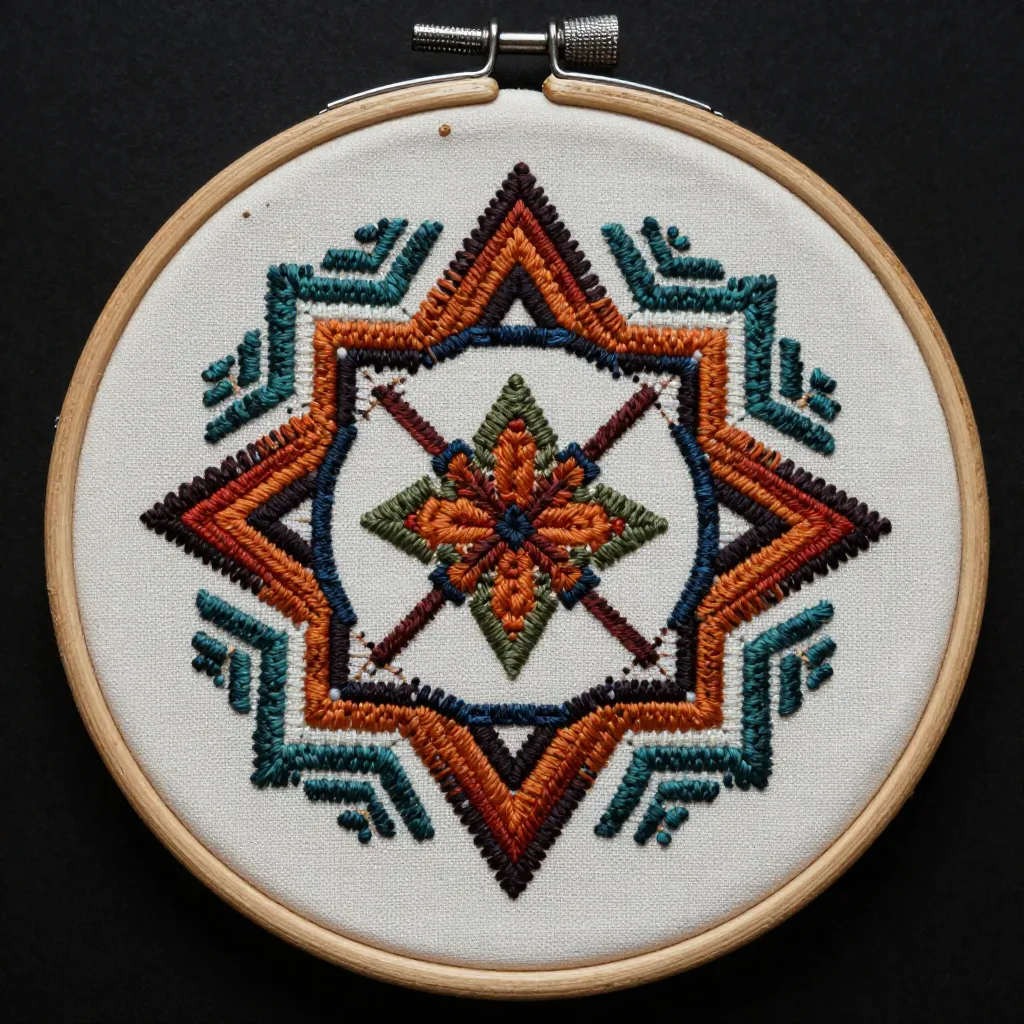
Frame & Finish
Professional mounting and display solutions that preserve textile integrity while enhancing visual presentation.
Mounting Techniques
Methods for preserving and displaying textile art
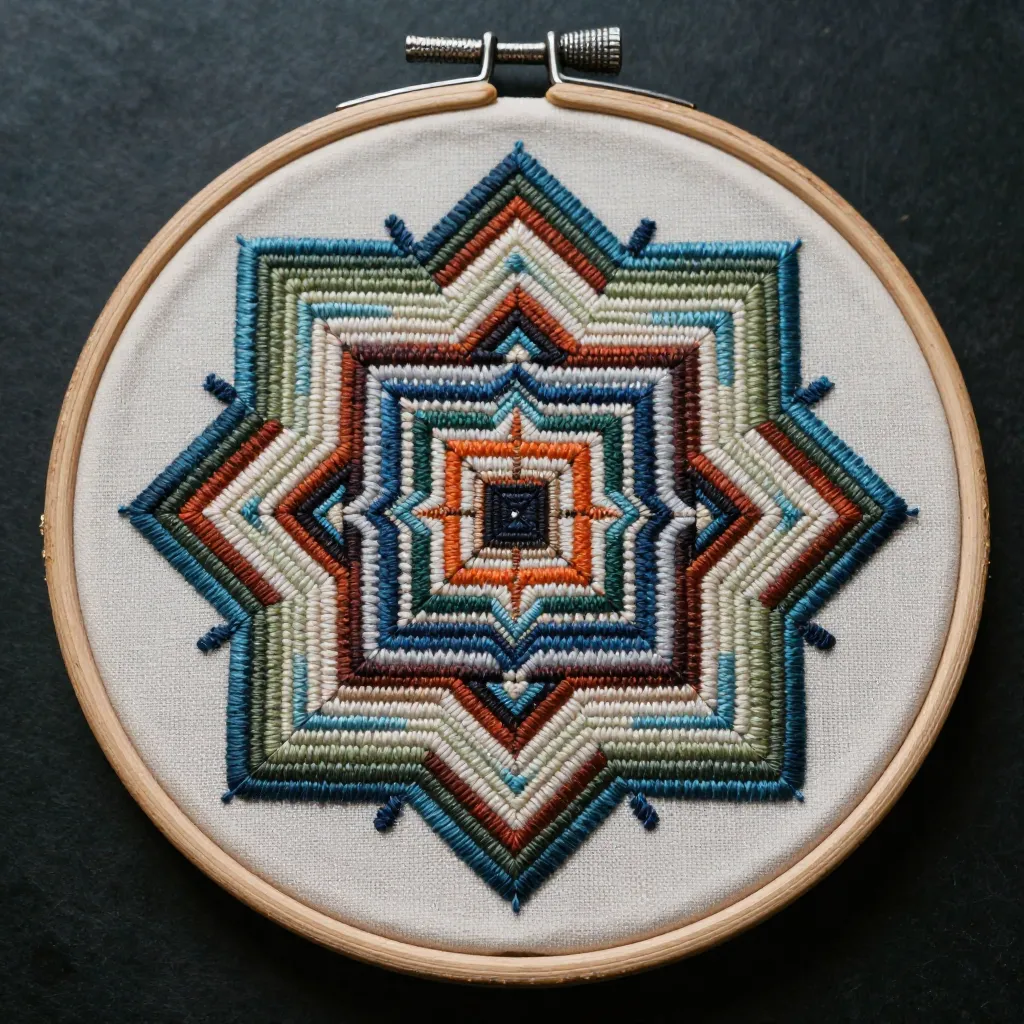
Traditional Framing
Classic approach using acid-free backing, UV-protective glass, and proper spacing to prevent contact between textile and glazing material.
Floating Frames
Contemporary presentation method where the embroidery appears to float within the frame, creating visual depth and emphasizing the textile as object.
Museum-Grade Boxes
Three-dimensional display cases that allow viewing from multiple angles while providing complete environmental protection. Suitable for dimensional work or pieces requiring special handling.
Conservation Standards
Materials and methods that protect textile integrity
Backing Materials
Acid-free board and fabric supports prevent deterioration over time. Proper tensioning ensures the textile maintains its intended shape without stress.
Key Requirements:
- • pH-neutral materials
- • Breathable support structure
- • Appropriate tension control
Glazing Options
UV-filtering glass or acrylic protects threads from light damage while maintaining visual clarity. Spacing prevents condensation and fabric contact.
Protection Features:
- • UV filtering (99%+ protection)
- • Anti-reflective coating
- • Proper spacing from textile
Environmental Factors
Conditions that affect textile preservation
Light Exposure
Limit direct sunlight. Use UV-filtering glazing and consider display location relative to windows and artificial light sources.
Humidity Control
Maintain stable relative humidity between 45-55%. Avoid areas with significant moisture variation.
Temperature
Stable room temperature around 68-72°F (20-22°C) is ideal. Avoid placement near heating or cooling vents.
Air Quality
Protect from smoke, cooking fumes, and other airborne particles that can accumulate on textile surfaces.
Integration Methods
Ways to incorporate embroidery into various contexts
Wall Display
Traditional hanging presentation suitable for most embroidery work. Proper mounting hardware and wall preparation ensure secure installation.
Apparel Integration
For pieces intended as wearable art, specialized mounting techniques allow embroidery to be integrated into garment construction while maintaining structural integrity.
Installation Consultation
For questions about mounting options, display requirements, or conservation considerations, we can provide guidance based on your specific piece and intended display location.